
Missouri Cannabis Sales Reach $1.5 Billion Milestone in 2025
Adult-use marijuana drives record tax revenue and continued industry growth

2026-02-12 · 4 min read
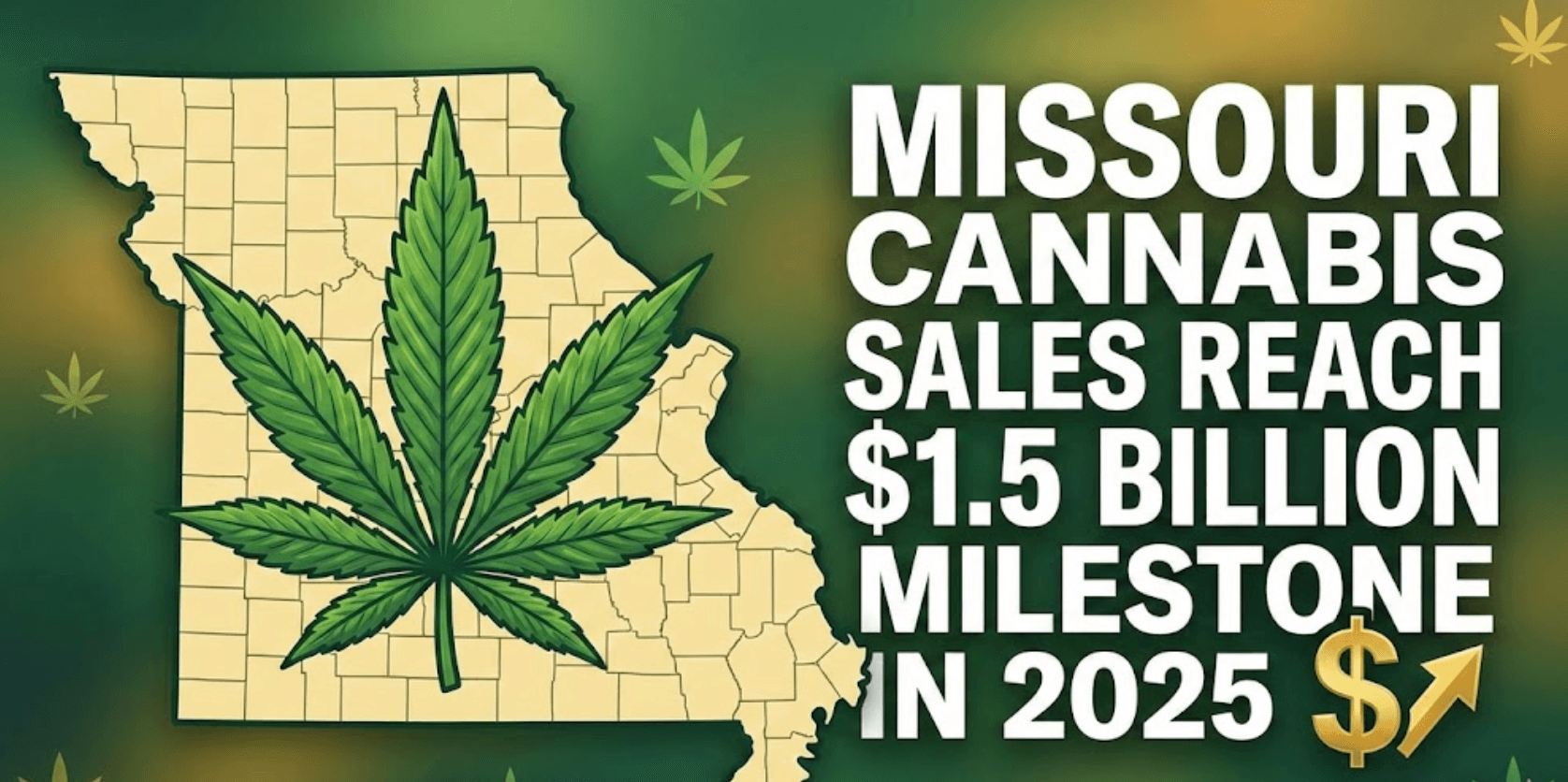
Missouri’s legal cannabis industry delivered another banner year in 2025, setting new records for both sales and tax revenue as the state’s adult-use market continued to mature.
According to state data, licensed cannabis retailers reported $1.5 billion in total sales last year, marking a 4% increase compared to 2024. The figures underscore the continued strength of Missouri’s regulated marijuana market since adult-use sales launched in early 2023.
Adult-Use Sales Lead the Market
As in many other legal states, adult-use marijuana accounted for the overwhelming majority of purchases. Adult-use cannabis sales reached $1.3 billion in 2025, according to the Missouri Department of Health and Senior Services (DHSS), which oversees the state’s cannabis program.
Medical marijuana sales represented a much smaller share of the overall market, reflecting a broader national trend as more consumers shift toward adult-use purchasing options.
Record-Breaking Tax Revenue
Missouri’s cannabis sales also translated into substantial public revenue. In 2025, legal marijuana generated a record $255.57 million in sales tax revenue.
Of that total:
- $151.72 million went to state government
- $103.84 million was distributed to local jurisdictions that host licensed dispensaries
These funds are used to support a range of programs, including community services and veteran-related initiatives.
Industry Leaders Highlight Local Impact
Andrew Mullins, executive director of the Missouri Cannabis Trade Association (MoCannTrade), emphasized the broader economic benefits of Missouri’s cannabis program.
“By purchasing from a legal, regulated dispensary, Missourians are helping generate hundreds of millions in revenue each year, which supports local communities, veterans and helps balance the budget,” Mullins said in a statement.
He also noted that all cannabis sold in Missouri dispensaries is cultivated within the state, supporting in-state businesses, job creation, and supply-chain development.
Expanding Licensed Market
Regulators have continued to approve new cannabis businesses as demand grows. The DHSS has issued nearly 400 licenses covering cultivation sites, manufacturing facilities, and retail dispensaries, according to reporting by the Missouri Independent.
Data from the Missouri State Information System shows the state now has more than 193 licensed dispensaries operating across Missouri, providing consumers with broad access to regulated cannabis products.
Looking Ahead
With steady sales growth, expanding retail access, and strong tax revenue performance, Missouri’s cannabis industry appears positioned for continued stability rather than explosive growth in the years ahead. Industry observers note that while year-over-year increases may moderate, the market’s consistent performance highlights the long-term economic role cannabis now plays in the state.
Source:
MJBizDaily — Missouri Cannabis Sales Hit Record $1.5 Billion in 2025
https://mjbizdaily.com/news/missouri-cannabis-sales-hit-record-1-5-billion-in-2025/614434/

About Marcus Chen
Culture Writer
Marcus explores the intersection of cannabis, art, and music. His work highlights the creative communities shaping the modern cannabis landscape.
Related Articles

The Fall of a Cannabis Giant: Cookies Faces Financial Collapse
Once valued at $250 million and featured on Forbes' cover, the Cookies brand now faces an existential crisis as court orders divert its revenue streams to settle an $8.4 million judgment.

Cannabis vs. Whiskey: How Marijuana Is Reshaping the Spirits Industry
A craft spirits distillery is closing tasting rooms and restructuring its business model, citing the growing consumer shift toward marijuana as a key factor in the decision.
Deception and Democracy: The Fight to End Cannabis in Massachusetts
A ballot initiative seeking to end Massachusetts' $1.6 billion cannabis industry faces accusations of using deceptive signature-gathering tactics-and there's little anyone can do about it.